Export & Trade
Marble Export Documentation from India: A Guide
By ATTPL Mining · · 4 min read
Key documents for exporting marble from India: IEC, commercial invoice, packing list, shipping bill, certificate of origin and ISPM-15 crate fumigation.
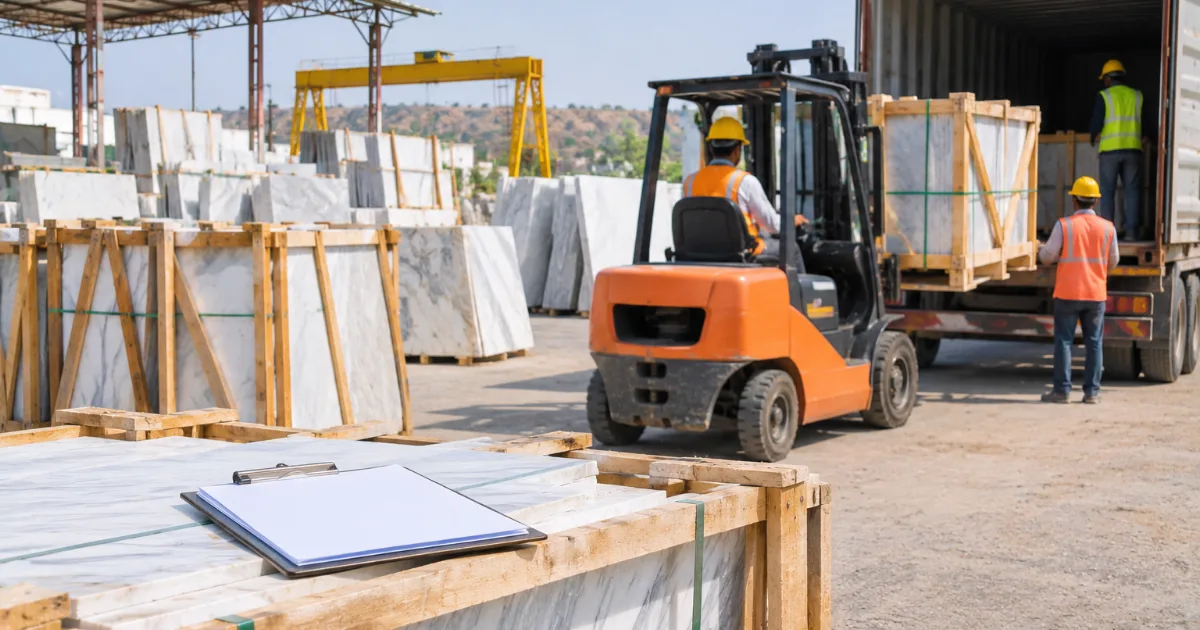
Importer Exporter Code (IEC) for Marble Export
Rajasthan marble is shipped to buyers across the world, and every consignment travels with a set of documents that customs, banks, shipping lines and the importer depend on. Missing or inconsistent paperwork is one of the most common reasons for shipment delays, extra port charges and payment disputes. This guide explains the core marble export documentation used in India, from the Importer Exporter Code to the shipping bill, certificate of origin and fumigation of wooden crates. Export procedures are updated from time to time, so always check the current rules with DGFT and customs before shipping.
An Importer Exporter Code issued by the Directorate General of Foreign Trade (DGFT) is the basic registration for any business that exports goods from India. It is linked to the business PAN and is quoted on customs filings and banking documents.
Exporters also usually need GST registration and a current account with a bank authorised to handle foreign exchange. If you are setting up a new export business, registration services can help you organise IEC, GST and related registrations in the right order.
Commercial Invoice and Packing List
The commercial invoice is the main sale document. It typically shows exporter and buyer details, invoice number and date, description of goods, HS code, quantity, unit price, total value, currency, delivery terms (Incoterms) and payment terms.
The packing list describes how the goods are packed. For marble this matters a lot because slabs and tiles vary in size, finish and weight.
- Crate or bundle numbers and the slabs or tiles in each
- Dimensions, thickness and finish (polished, honed and so on)
- Net and gross weight per crate and in total
- Measurement in square metres or square feet as agreed with the buyer
- Container number and seal number once loaded
Invoice and packing list figures must match each other and the shipping bill. Mismatches are a frequent cause of customs queries.

Shipping Bill and Customs Clearance
The shipping bill is the export declaration filed electronically with Indian customs, usually through a licensed customs broker. It records the exporter, goods, HS classification, value, port of loading and destination. Customs may examine the cargo before granting permission to export, after which the goods can be loaded.
After shipment, the shipping line or freight forwarder issues a bill of lading (for sea freight). This document is critical for the buyer to collect goods and for banks processing payments. Coordinating inland haulage and port movements through multimodal transportation services can help keep documents and cargo in step.
Certificate of Origin
A certificate of origin confirms that the goods were produced in India. Buyers may need it for customs clearance in their country, and a preferential certificate may allow reduced duty where a trade agreement applies. Non-preferential certificates are issued by authorised bodies, and preferential ones follow the rules of the specific agreement.
Which certificate is needed, and who issues it, depends on the destination and trade agreement. Check the current procedure on the DGFT portal before applying.
Fumigation and ISPM-15 for Wooden Crates
Marble slabs and tiles are often shipped in wooden crates or on pallets. Many countries require solid wood packaging to comply with ISPM-15, an international standard that requires wood to be treated, for example by heat treatment or approved fumigation, and marked with the official treatment stamp.
Some buyers also ask for a fumigation certificate for the container. Use treated, properly marked wood and keep the treatment or fumigation certificate with your shipping documents. Our guide on how to pack and transport marble and granite slabs safely covers crate design and loading.
Contracts, Payment Terms and Final Checks
A clear sales contract or proforma invoice should set out specifications, tolerances, inspection, delivery terms, payment terms and how disputes will be handled. For growing exporters, MSME legal services can help review contract terms before you commit.
- Do invoice, packing list and shipping bill match exactly?
- Is the HS code consistent across all documents?
- Are crates ISPM-15 marked and certificates attached?
- Has the buyer confirmed the documents their bank or customs needs?
ATTPL Mining & Minerals can help buyers source Rajasthan marble and other natural stones and minerals and coordinate supply requirements through our services. Contact ATTPL Mining & Minerals to discuss your export requirement.
Key takeaway: Marble exports rely on consistent documents: IEC, commercial invoice, packing list, shipping bill, certificate of origin and ISPM-15 compliant crates; confirm current DGFT and customs rules before every shipment.
Frequently asked questions
Is an IEC mandatory to export marble from India?
In general, an IEC from DGFT is required to export goods from India. Check the current rule on the DGFT portal for any exemptions.
Do wooden marble crates need fumigation?
Many importing countries require ISPM-15 treated and marked wood packaging. Confirm the destination country's rules with your buyer and forwarder.
Who files the shipping bill?
It is filed electronically with customs, usually by a licensed customs broker on the exporter's behalf.
Sources and further reading
This article provides general information on export documentation and is not legal or financial advice. Export rules change; confirm current requirements with DGFT, customs or a qualified professional.