Marble Care
Marble Sealing and Stain Protection: A Practical Guide
By ATTPL Mining · · 3 min read
How to seal marble floors and countertops to resist stains: choosing a sealer, application, absorption tests, daily care and stain removal.
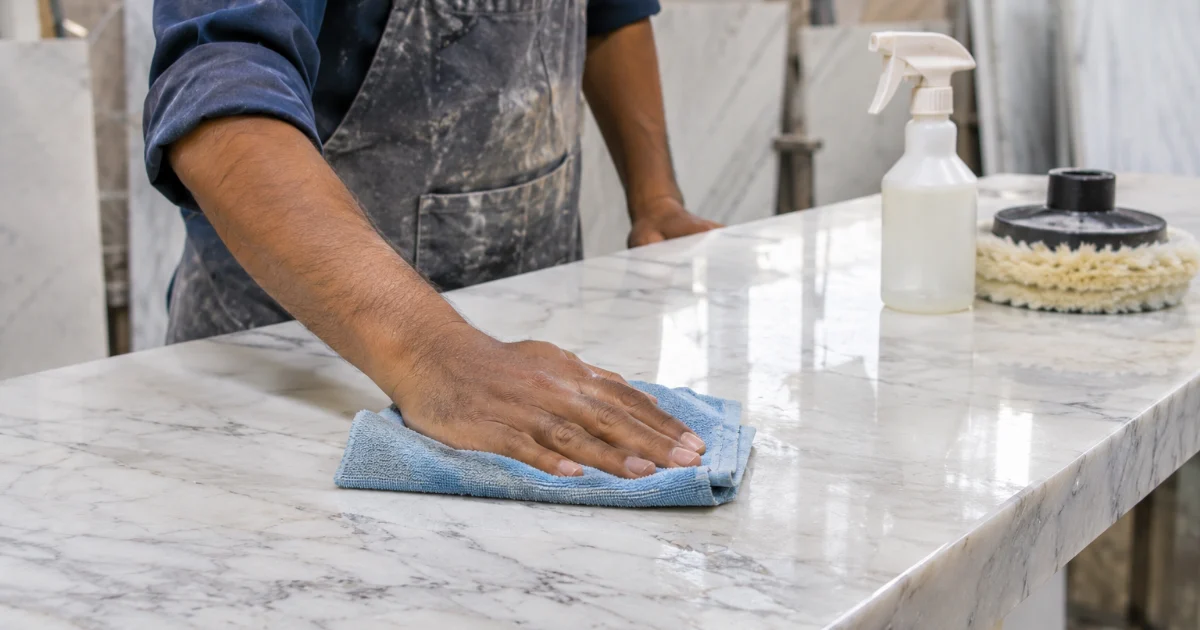
Why marble stains
See also: Marble Inlay Work: How to Choose and Care for Inlaid Stone Pieces
Marble is beautiful but porous. Oil, tea, turmeric, wine and even water can seep into its surface and leave marks. A good sealer reduces absorption and gives you time to wipe up spills before they become stains. Sealing does not make marble stain-proof, but combined with sensible daily care, it keeps floors and countertops looking good for years.
Marble is a calcium carbonate stone with tiny pores. Liquids can penetrate these pores and leave discoloration. Acids such as lemon juice, vinegar and some cleaners do something different: they etch the surface, leaving dull spots. Sealers help against stains but do not stop etching, which is why acid spills must be wiped immediately.
Choosing a sealer
- Penetrating (impregnating) sealers soak into the stone and are preferred for most marble.
- Topical coatings sit on the surface and can wear or look plastic-like.
- Choose products made for natural stone and suited to indoor or outdoor use.
- For kitchen counters, check that the product is suitable for food-contact areas once cured.
How to seal marble
- Clean the surface thoroughly and let it dry completely.
- Test the sealer on a small hidden area first.
- Apply evenly with a cloth or applicator as per the label.
- Wipe off excess before it dries to avoid haze.
- Allow the recommended curing time before use.
Freshly polished floors are best sealed after polishing; see our marble floor polishing guide.
When to reseal
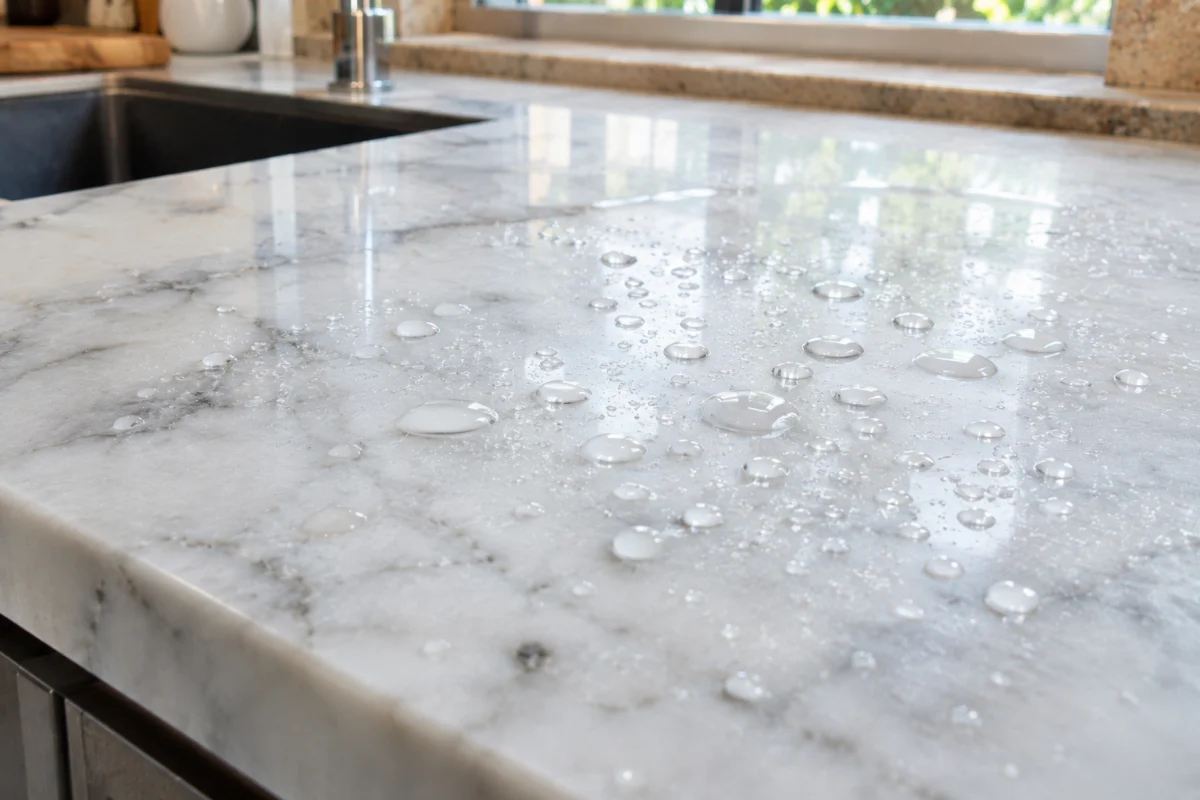
A simple water test helps: place a few drops of water on the surface. If they darken the stone within a few minutes, it may be time to reseal. High-use areas such as kitchens need resealing more often than bedrooms. Different marble grades absorb differently; our guide to Makrana marble grades explains the variety.
Daily care
- Wipe spills immediately, especially acidic ones.
- Use pH-neutral cleaners made for stone.
- Use doormats and furniture pads to reduce scratches.
- Avoid vinegar, lemon, bleach and harsh scrubbers.
Kitchen countertops and bathrooms
Kitchens and bathrooms face the toughest conditions for marble: oil, spices, acidic foods, soaps, hair dyes and constant moisture. In kitchens, use trivets and cutting boards, wipe spills immediately and avoid leaving lemons, tomatoes or vinegar bottles directly on the stone. In bathrooms, rinse off soap residue and dry wet areas to prevent dull patches and water marks. Many homeowners choose harder stones such as granite for the busiest kitchen counters and use marble where it can be cared for more easily.
Outdoor and commercial marble
Outdoor marble faces sun, rain, dust and temperature changes, and commercial floors in hotels, offices and temples carry heavy foot traffic. Choose finishes suited to the use — polished finishes look elegant but can be slippery when wet, while honed or textured finishes give better grip outdoors. Use sealers rated for exterior use, schedule professional maintenance and place entrance mats to trap grit that scratches the surface.
Choosing a professional service
For large areas, old stains or heavy etching, professional stone care services can hone, polish and seal marble with proper equipment. Ask for references, a test patch, the products they will use and a clear quotation. Avoid services that use harsh acids or wax coatings that later trap dirt and yellow. Good professionals explain how to maintain the floor afterwards.
Dealing with stains
Oil-based stains may be lifted with a poultice designed for stone; organic stains such as tea may fade with appropriate stone-safe products. Deep or old stains and etching often need professional honing and polishing. When buying marble for new projects, ask suppliers about finish and porosity, and follow our supplier verification checklist. For marble sourcing and advice, contact ATTPL Mining. Construction and flooring works are handled by ATTPL Infra.
Frequently asked questions
Does sealing make marble stain-proof?
No. It slows absorption and gives time to clean spills, but stains can still occur if spills are left.
Does sealer prevent etching from lemon or vinegar?
Generally no. Acids etch marble; wipe them immediately.
How often should marble be sealed?
It depends on use and stone; a water drop test helps decide when resealing is needed.
Can I seal marble myself?
Yes, many homeowners seal small areas themselves by following product instructions carefully; large or damaged areas are best handled by professionals.