Marble & Stone
Quartzite Stone: Uses, Types and Buying Tips for Projects
By ATTPL Mining · · 2 min read
A practical buyer's guide to quartzite — how it differs from sandstone and marble, common uses in flooring, cladding and landscaping, finishes, quality checks and how to order slabs and tiles.
What quartzite is
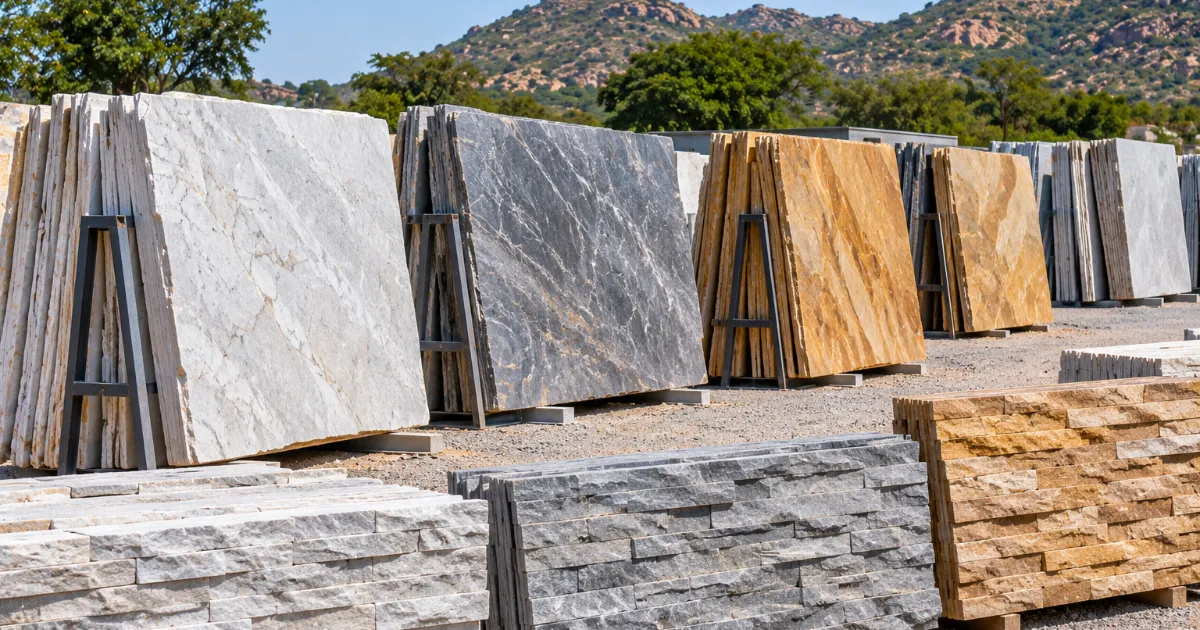
Quartzite is one of the hardest and most durable natural stones used in construction. Its strength and natural colours make it popular for outdoor paving, wall cladding and premium interiors — but buyers often confuse it with sandstone or marble.
Quartzite is a metamorphic rock formed when quartz-rich sandstone is subjected to heat and pressure. The grains fuse together, making the stone dense, hard and resistant to weathering. Colours range from white and grey to shades of pink, green and gold depending on minerals present. Rajasthan and neighbouring regions produce several quartzite varieties used across India and for export.
Quartzite compared with other stones
- Harder and more abrasion-resistant than marble, so it suits high-traffic floors
- Less porous than most sandstones, so it weathers better outdoors
- Usually needs diamond tools for cutting, which can affect processing cost
- Some stones sold as 'quartzite' are actually marble or soft sandstone — always test samples
For outdoor paving options compared side by side, see our Kota stone, sandstone and granite guide.
Common uses
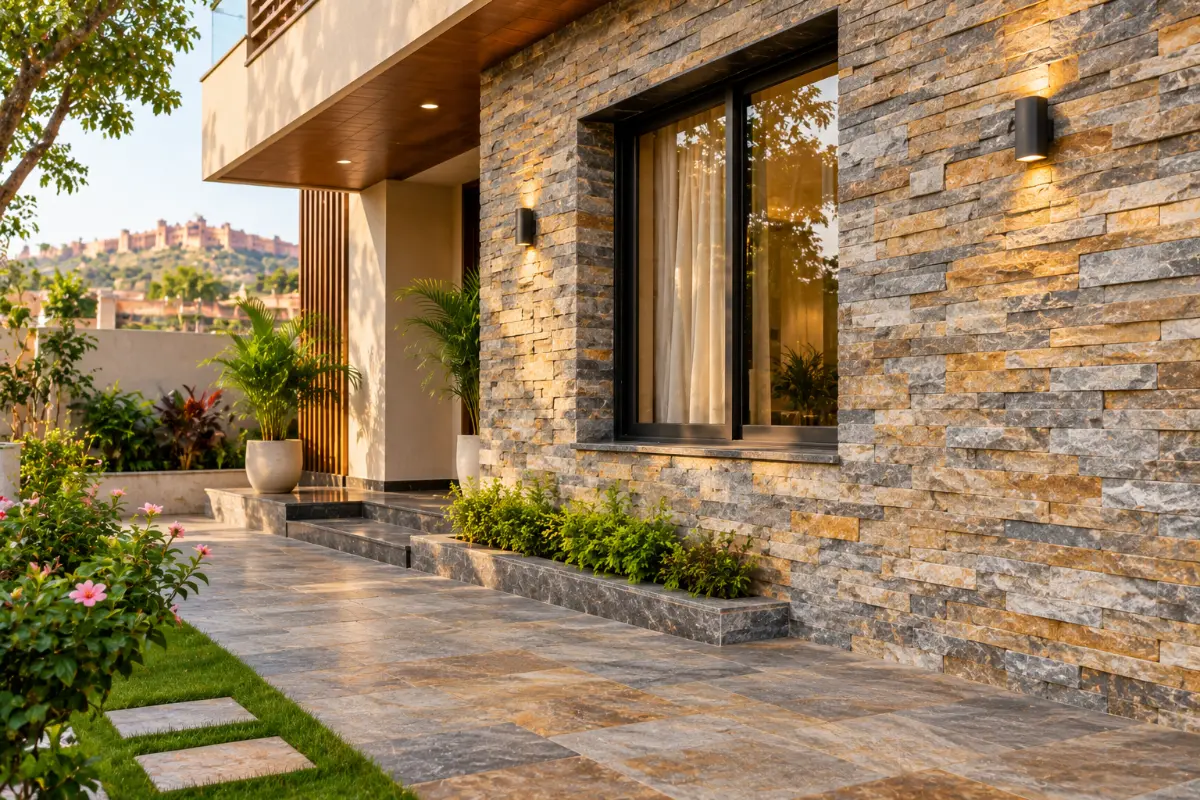
Quartzite is widely used for exterior and interior wall cladding, including split-face and ledge-stone panels, for driveway and pool-side paving, steps and landscaping, and in polished form for kitchen tops and feature walls. Natural split surfaces give good slip resistance outdoors. Our natural stone wall cladding guide explains fixing methods.
Quality checks before buying
- Do a simple scratch test: genuine quartzite scratches glass and is hard to scratch with a steel blade
- Check water absorption and density test results from the supplier
- Inspect for cracks, rust spots and uneven thickness
- Match colour and texture across the full lot, not just one sample
- Confirm the finish — natural, honed, polished, flamed or brushed
The same discipline applies as in our slab defects inspection checklist.
Ordering and logistics
Share drawings with exact sizes and quantities plus wastage allowance, agree tolerances, and ask for photos of the actual lot. Stone should be packed in crates or on A-frames for transport — see our guide on packing and transporting slabs safely. For long-distance or project deliveries, ATTPL Fleet can support logistics.
Sourcing with ATTPL Mining
ATTPL Mining & Minerals helps builders, architects and traders source natural stone from Rajasthan with clear specifications and inspection. Construction projects using stone can also get support from ATTPL Infra.
Frequently asked questions
Is quartzite better than marble for kitchen tops?
Quartzite is generally harder and more resistant to scratches and etching from acids than marble, but it should still be sealed and maintained.
How can I tell real quartzite from marble?
Real quartzite scratches glass and resists a steel blade, while marble scratches more easily and reacts to mild acid. Ask for test reports.
Does quartzite need sealing?
Many quartzites benefit from sealing, especially in kitchens and outdoors. Porosity varies by variety.
Sources and further reading
This article is general information for buyers. Properties vary by quarry and lot; always test samples and confirm specifications for your application.