Natural Stone
Stone Jali Screens: A Buyer's Guide to Carved Sandstone and Marble Lattice
By ATTPL Mining · · 2 min read
How to buy carved stone jali for homes, temples, hotels and facades: sandstone vs marble, hand-carved vs CNC, thickness, patterns, fixing, weathering and care.
Why jali still works
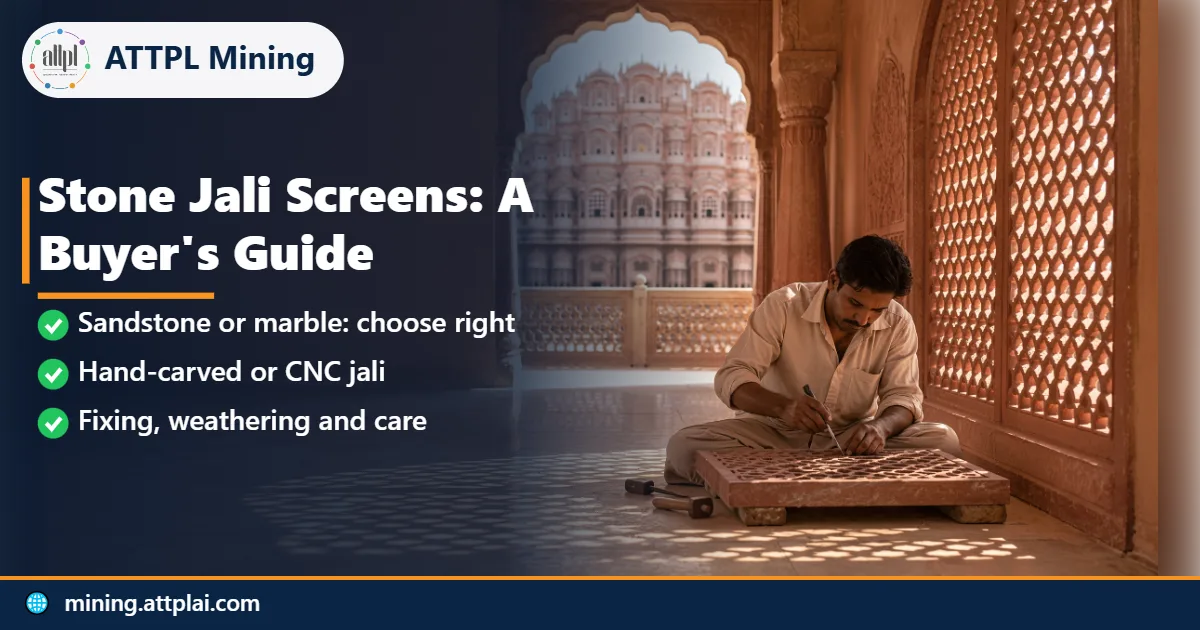
Jali, the pierced stone screen seen in Rajasthan's forts, havelis and temples, is as practical today as it was centuries ago. It lets in light and breeze while giving privacy and breaking harsh sun. Architects now use stone jali for facades, balconies, staircase walls, boundary walls, temple rooms and hotel lobbies.
For the wider choice of stone for walls, see our natural stone wall cladding guide.
Choosing the stone
- Sandstone: the classic choice for outdoor jali, available in pink, red, yellow and beige tones and easy to carve
- Marble: suits indoor screens, temple rooms and inlay-style designs where a fine finish matters
- Thickness: thicker panels are stronger and suit large openings; thin panels are lighter but more fragile
- Pattern: open geometric patterns let in more light; dense floral patterns give more privacy
- Lot matching: order all panels from one lot for an even colour
Our guide to Rajasthan sandstone types and finishes explains colour and texture options.
Hand-carved or CNC
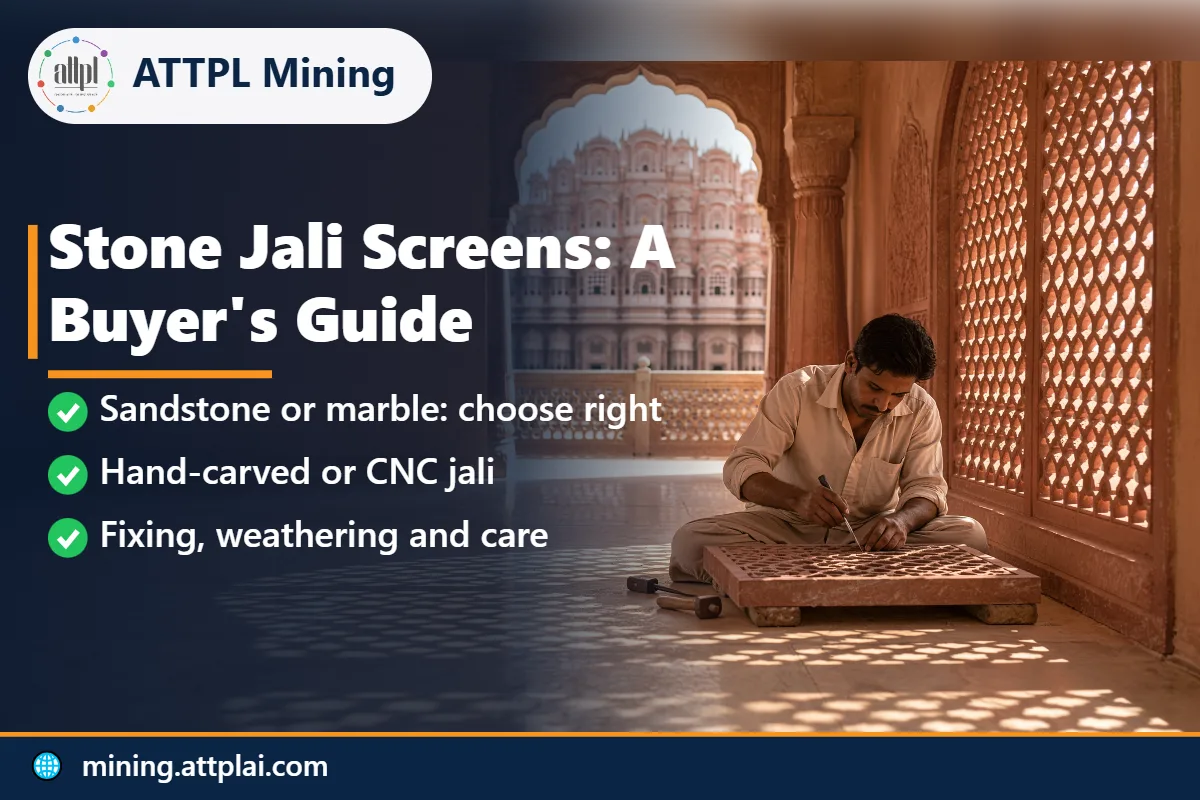
CNC-cut jali gives exact repeat patterns, quicker delivery and consistent sizes, which suits large facade projects. Hand-carved jali has depth, softer edges and individual character, and is preferred for heritage-style homes and temples. Many workshops combine the two, cutting the outline by machine and finishing by hand. Ask for a sample panel and approve it before the full order, as explained in our sample and mock-up guide.
Fixing, weathering and care
Jali panels must be fixed securely into a frame or with suitable stainless steel anchors, especially on upper floors and boundary walls. Have the design checked by your architect or structural engineer. Outdoors, sandstone weathers gradually and may collect dust in the openings; clean with water and a soft brush, avoid acids and pressure washers at close range, and consider a breathable sealer if advised.
ATTPL Mining & Minerals
ATTPL Mining & Minerals connects buyers with verified natural stone suppliers and carving workshops in Rajasthan. Toll-free: 1800 890 0815.
Frequently asked questions
Is sandstone jali suitable for outdoor use?
Yes. Sandstone has been used for outdoor jali in Rajasthan for centuries. Choose a dense, well-cut stone and fix it securely.
How long does a custom jali order take?
It depends on size, pattern and whether it is hand-carved or CNC-cut. Agree timelines with the workshop after sample approval.
Can jali panels be made to any size?
Within limits. Very large openings are usually filled with several panels joined in a frame.
Sources and further reading
This article is general buying information. Confirm design, fixing and specifications with your architect, structural engineer and supplier.