Marble & Stone
From Block to Slab: How Marble Is Processed in Rajasthan
By ATTPL Mining · · 2 min read
A buyer's guide to marble processing — quarrying blocks, dressing, gang saw and block cutter sawing, resin and mesh reinforcement, polishing, sizing, grading and why each step affects quality and price.
Quarrying and dressing blocks
A polished marble slab in a showroom is the end of a long journey. Understanding how blocks become slabs helps buyers ask the right questions about thickness, finish, reinforcement and price — and avoid surprises after installation.
Marble is extracted in large blocks using wire saws, chain cutters and controlled methods that reduce breakage. Blocks are then dressed into a rectangular shape and checked for cracks, colour and pattern. Rajasthan's marble belt, including Makrana, Rajsamand and Udaipur regions, supplies blocks to processing hubs like Kishangarh. Read more about grades in our Makrana marble guide.
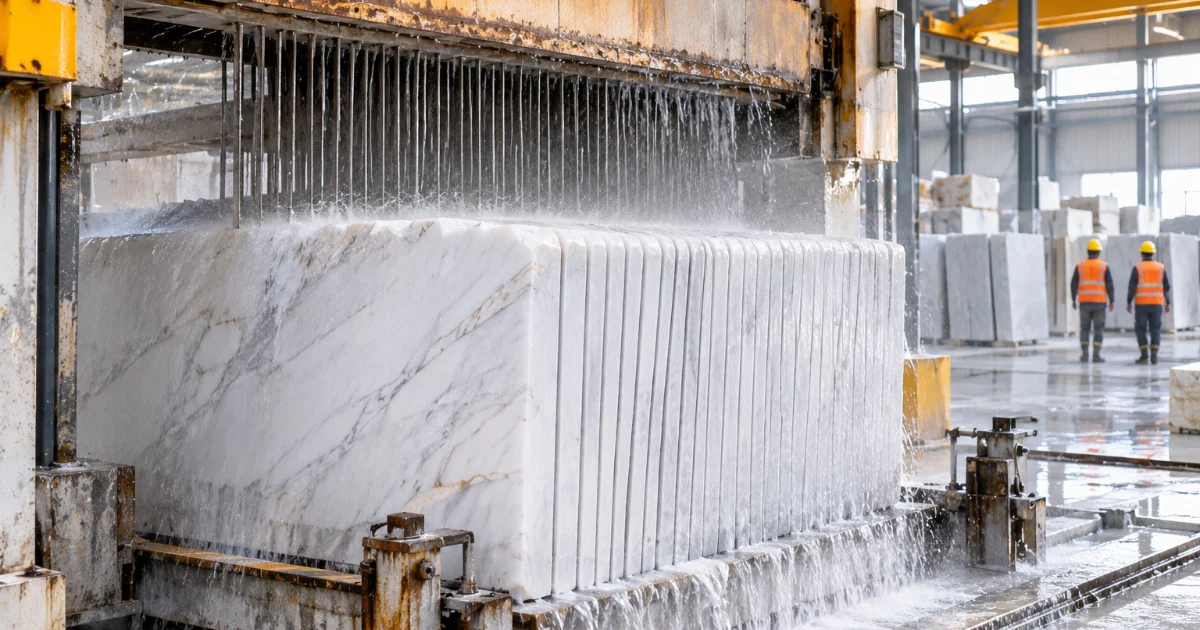
Sawing: gang saws and block cutters
- Gang saws cut a whole block into many slabs at once, giving uniform thickness and large sizes
- Block cutters with circular blades cut smaller slabs or tiles and are faster for some sizes
- Multi-wire saws are increasingly used for faster, precise cutting
- Water is used throughout to cool blades and control dust
The fine sludge from cutting is marble slurry, which must be managed responsibly — see our marble slurry management guide.
Reinforcement and filling
Natural veins and small fissures can weaken a slab. Processors may apply epoxy resin to fill pores and a fibreglass mesh on the back to strengthen slabs for transport and installation. This is normal practice, but buyers should know what treatment has been done and confirm it suits their use.
Polishing and finishing
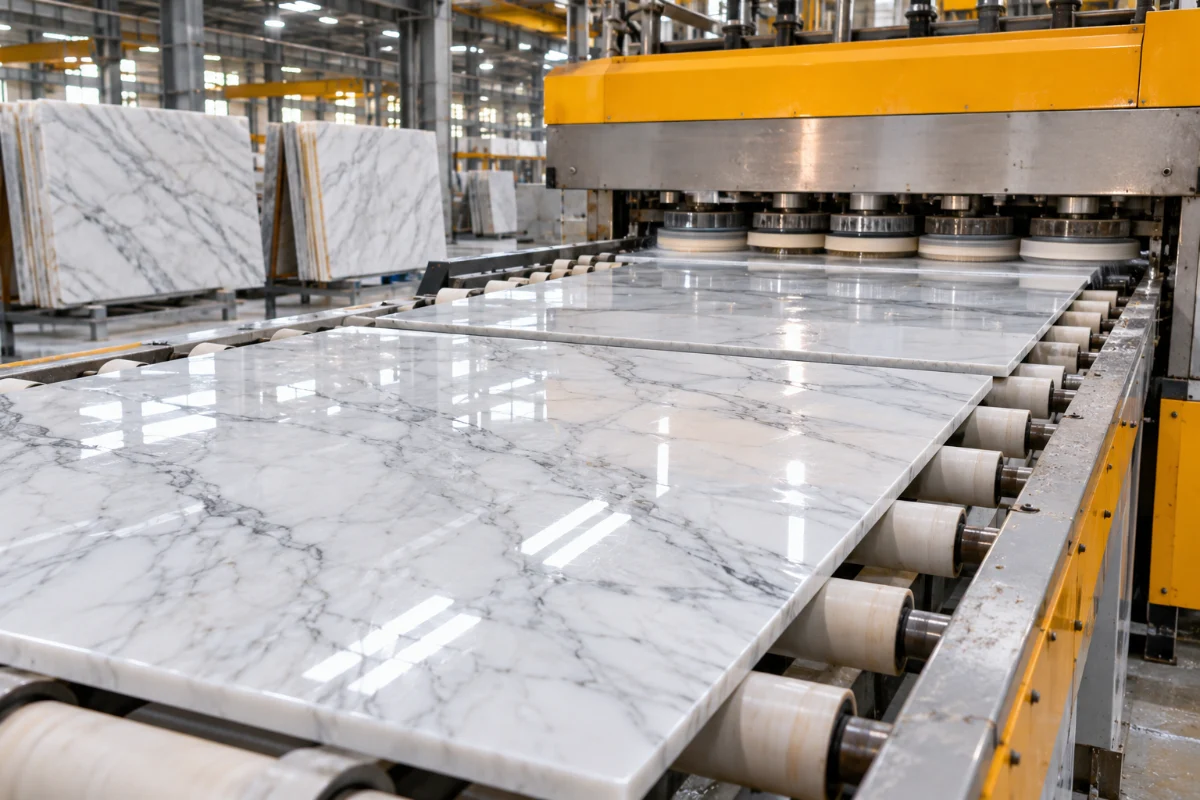
Slabs pass through line polishing machines with progressively finer abrasives to create polished, honed or other finishes. They are then edge-cut to size, inspected and graded by colour, pattern and defects. Before buying, inspect slabs as covered in our slab defects inspection checklist.
What this means for buyers
- Ask for the actual slab thickness and tolerance
- Check whether slabs are resin-treated or mesh-backed
- Buy the full quantity from one block or lot for colour consistency
- Allow for wastage in cutting and pattern matching
- Confirm packing and loading method
Source with confidence
ATTPL Mining & Minerals helps buyers source and inspect marble from Rajasthan's processing hubs. For safe dispatch of slabs, ATTPL Fleet explains load securing, and project installation can be supported by ATTPL Infra.
Frequently asked questions
What is a gang saw in marble processing?
A machine with many parallel blades that cuts a marble block into multiple slabs of uniform thickness at once.
Is resin treatment of marble bad?
No, it is common practice to fill pores and strengthen slabs. Buyers should know what treatment was applied.
Why should all slabs come from one block?
Slabs from the same block match better in colour and veining, giving a uniform look.
Sources and further reading
This article is general information for buyers. Processing methods vary by unit; confirm specifications and treatments with your supplier.