Stone Buying Guide
Natural Stone vs Engineered Quartz Countertops: How to Choose for Your Kitchen
By ATTPL Mining · · 3 min read
A balanced comparison of granite, marble and engineered quartz countertops for Indian kitchens, covering heat and stain resistance, maintenance, appearance, thickness and how to check quality.
What each material is
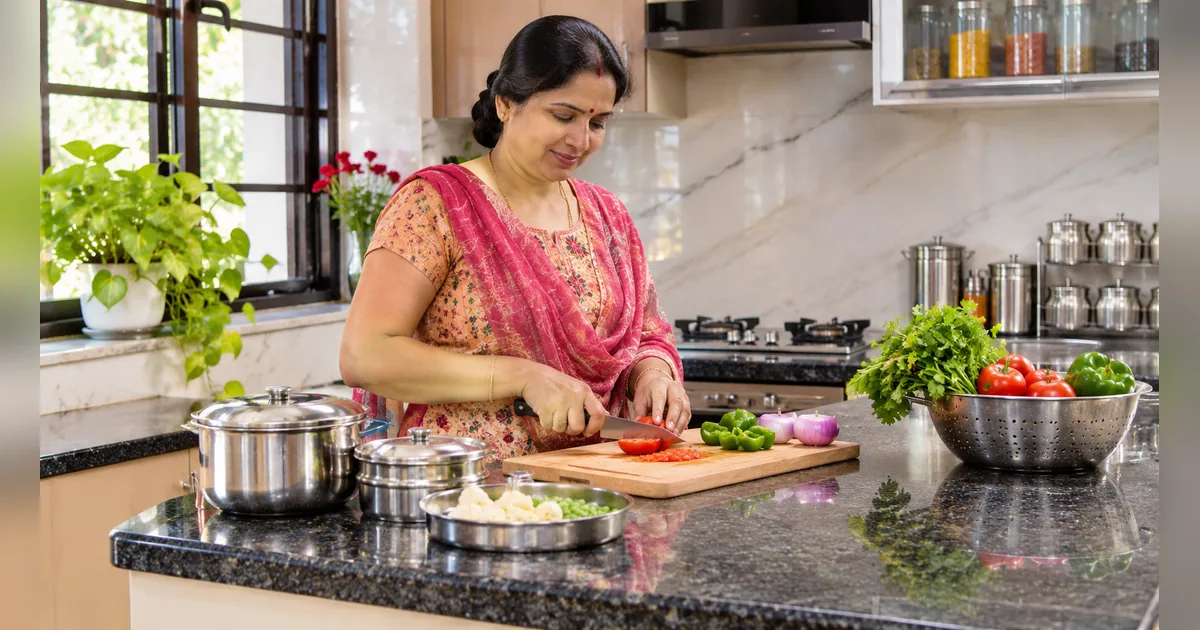
The kitchen platform takes more punishment than almost any surface in a home. It faces hot vessels, spilled turmeric and oil, daily cutting and cleaning. Home owners in India usually choose between natural stone, mainly granite and sometimes marble, and engineered quartz, a manufactured material made largely from crushed quartz bound with resin. Each has strengths and limits. This guide compares them in practical terms, so that you can choose according to your cooking habits, budget and taste, not because of a sales pitch.
Natural stone countertops are cut from quarried blocks, so every slab is unique. Granite is hard and widely used in kitchens. Marble is softer and more porous, valued for its look, and is more often used in dining areas, vanities or low-use zones. Engineered quartz is made in factories, with consistent colour and pattern, using crushed quartz and resin. Because the ingredients and process differ, so does behaviour in daily use. For background on stone types, see our guides on granite countertop thickness, finish and edge and quartzite stone.
Heat, stains and scratches
Compare the materials on the problems you actually face:
- Heat: granite tolerates heat well, but sudden temperature shocks can still stress any stone, so use trivets. Engineered quartz contains resin, which can be damaged by very hot vessels placed directly on it.
- Stains: granite usually needs periodic sealing, depending on the variety. Marble stains and etches more easily from acids such as lemon, tomato and vinegar. Quartz is typically non-porous and resists stains, though strong dyes and chemicals can still mark it.
- Scratches: granite and quartz are both hard, but cutting directly on any surface dulls knives and can leave marks. Use a board.
Follow the manufacturer's care instructions for any product, and do not assume that one material is maintenance free.
Look, feel and consistency
Natural stone gives variation: veins, crystals and shade changes that cannot be copied exactly. Some people love this, while others prefer the uniform look of quartz, especially when long runs need matching. If you choose natural stone, select the actual slab, not a small sample, and mark which slab goes to your kitchen. Light patterned stones can look very elegant but may show stains faster, and very dark polished surfaces can show dust and water marks. Match the finish to your usage: polished, honed or leather finishes each feel and wear differently.
Thickness, joints and installation
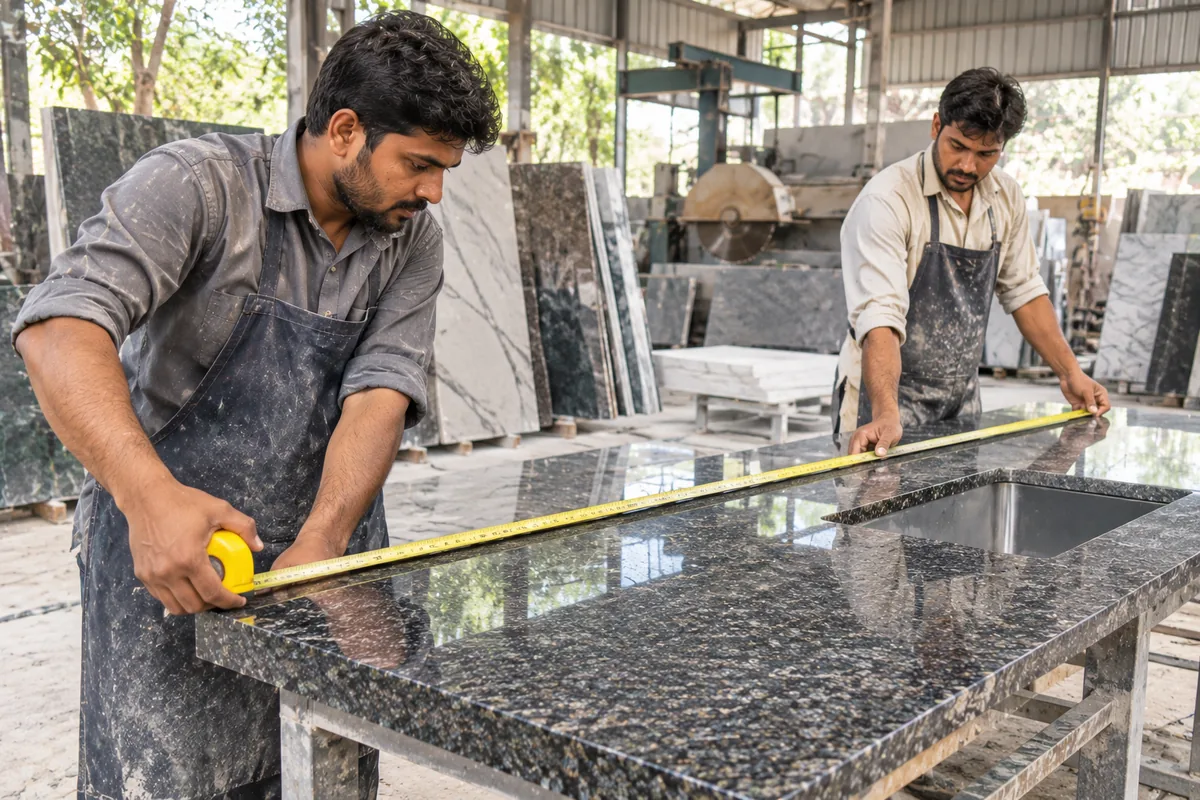
Most countertops are cut in standard thicknesses, with edges that may be built up to look thicker. Poor support or thin sections near the sink and cooktop cut-outs can lead to cracks. Ask the fabricator how cut-outs will be reinforced, where joints will be placed and how seams will be finished. Measure carefully, because templates must match the actual kitchen units after they are fixed. Check that the base cabinets are level and strong enough for the weight. Our article on marble slab inspection steps can also be used for a basic defect check on any stone slab.
Questions to ask before you decide
- Does the supplier provide a written description of the material, thickness and finish?
- Is the actual slab for your kitchen shown, photographed and marked?
- What sealing, if any, is needed, and how often?
- How are cut-outs, joints and edges finished, and who is responsible for damage during installation?
- What care instructions will be given in writing?
If you buy natural stone, a reliable source matters. Learn how to verify a stone supplier before paying an advance.
Whichever material you choose, put the care routine in writing and share it with everyone who uses the kitchen. Wiping spills quickly and using boards and trivets protects any surface far more than any product choice.
ATTPL Mining & Minerals
ATTPL Mining & Minerals connects buyers with verified natural stone suppliers in Rajasthan. Toll-free: 1800 890 0815.
Frequently asked questions
Which is better for a busy Indian kitchen?
Granite and engineered quartz both suit heavy use. The choice depends on look, heat habits and how much care you are willing to give.
Does granite need sealing?
Many granites benefit from periodic sealing, but needs vary with the variety. Ask the supplier for guidance on the exact stone.
Can I place hot vessels on quartz?
It is safer to use trivets on any countertop. Engineered quartz contains resin that can be damaged by direct high heat.
Sources and further reading
This article is general buying information.