Industrial Minerals
Red and Yellow Ochre: Uses, Specifications and Buying Guide
By ATTPL Mining · · 2 min read
What natural ochre is, where it comes from in Rajasthan, its uses in paints, cement colouring, ceramics and more, the specifications to ask for and how to buy reliably.
What ochre is
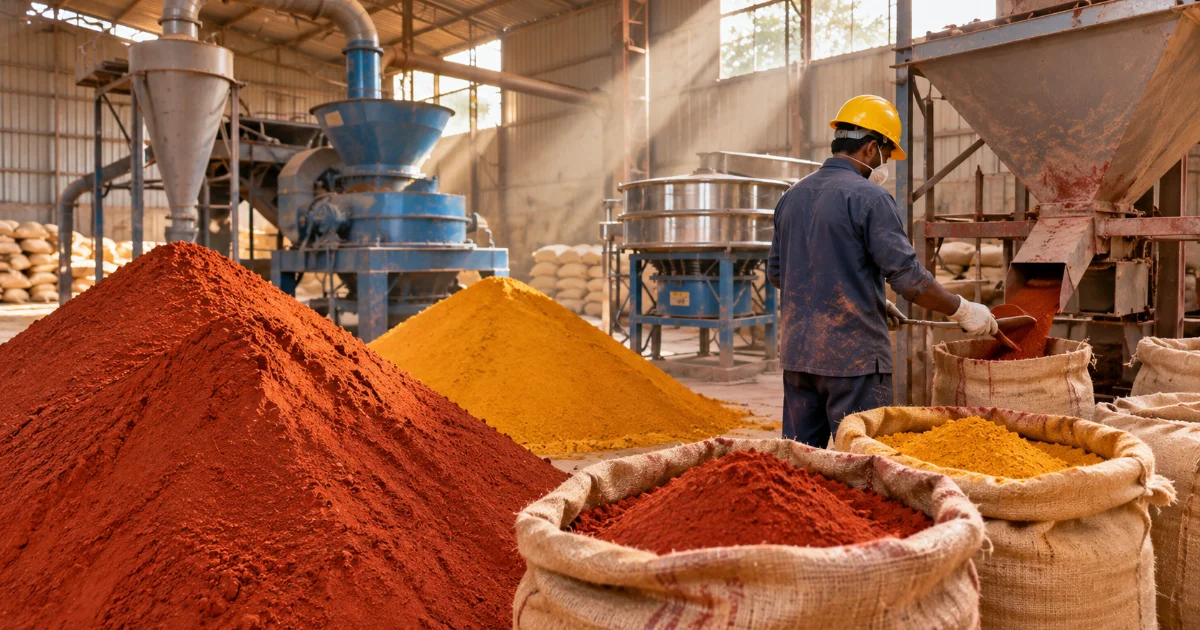
Ochre is a natural earth pigment made of iron oxides mixed with clay and silica. Red ochre (often called geru) gets its colour mainly from hematite, while yellow ochre is coloured by hydrated iron oxides such as goethite. Heating yellow ochre can turn it red. Rajasthan is a leading source of ochre in India, with deposits in districts such as Chittorgarh.
Main uses
- Paints, primers and distempers, especially low-cost and earth-tone shades
- Colouring cement products, tiles, pavers and plasters
- Terracotta, ceramics and traditional wall finishes
- Rubber, plastics, linoleum and other fillers where colour is useful
- Refined grades for specialised uses after proper processing and testing
Ochre is often supplied along with other industrial minerals from Rajasthan such as calcite and china clay; see our calcite powder guide.
Specifications to ask for
- Iron oxide (Fe2O3) content
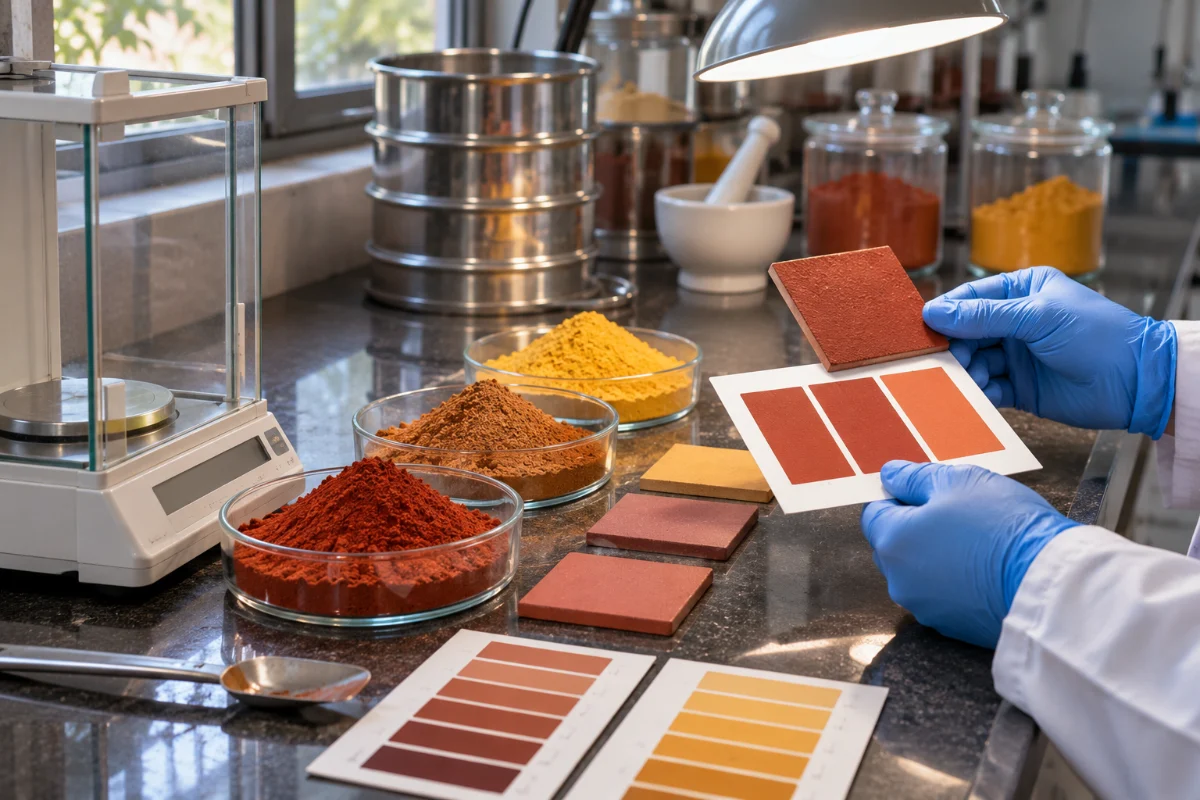
- Colour and tinting strength compared with an agreed standard sample
- Particle fineness, usually given as residue on a specified sieve
- Oil absorption, important for paints
- Moisture, pH and water-soluble salts
- Heavy metal limits where the end use requires them
Every lot should come with a certificate of analysis. Agree the test methods and the relevant BIS standard in the purchase order so both sides measure the same way.
Testing a new supplier
Start with a trial lot. Test colour against your standard under daylight and in your actual product, such as a paint drawdown or a cement tile, not only in the powder. Check consistency over several lots before signing a long contract, and visit the processing unit if volumes are large. Our supplier verification checklist covers documents and site checks.
Packing, storage and safety
Ochre is usually packed in HDPE or paper bags with inner liners. Store bags dry and off the floor, because moisture causes lumps and colour change. Use dust masks and good ventilation while handling fine powder, and keep material from different lots separate to avoid shade variation.
How ATTPL Mining and Minerals can help
ATTPL Mining and Minerals helps buyers source ochre and other industrial minerals from Rajasthan with agreed specifications, test reports and dispatch support. For export documentation, read our guide on marble and mineral export documents.
Frequently asked questions
What is the difference between red and yellow ochre?
Both are natural iron oxide pigments; red ochre contains mainly hematite, while yellow ochre contains hydrated iron oxides such as goethite.
Can ochre be used in cement products?
Yes, it is used to colour cement tiles, pavers and plasters. Test colour and consistency in your mix before bulk use.
How should ochre be stored?
In dry, covered storage, off the floor, with lots kept separate to avoid shade variation.
Sources and further reading
This article is general information for buyers of natural stone and minerals, not technical advice. Mineral properties vary by deposit and lot; rely on test reports for your application.