Safety & Operations
Stone Slab Yard Safety: Handling and Storing Marble and Granite Slabs
By ATTPL Mining · · 2 min read
Practical safety rules for marble and granite slab yards: rack design, loading balance, lifting equipment, exclusion zones, PPE, dust control and training.
Why slab yards need strict rules
See also: Dust Control at Quarries and Crushers: A Practical Air Quality Guide
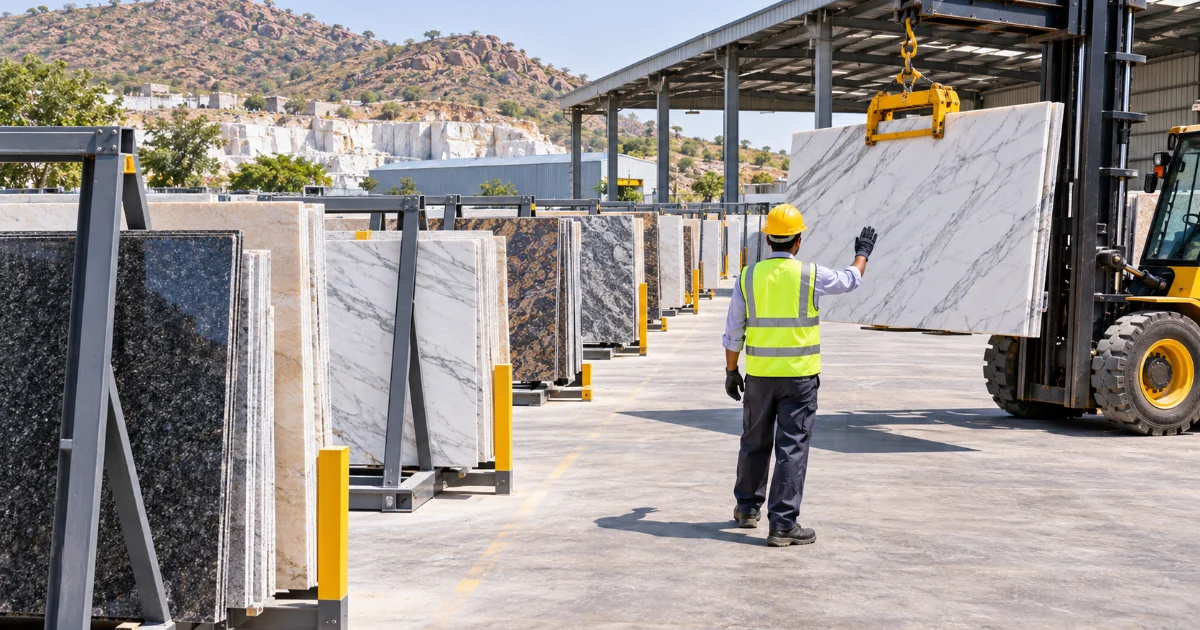
A single polished slab of marble or granite can weigh several hundred kilograms. Slabs that tip over, slip from clamps or fall from racks cause serious injuries and heavy losses. Most accidents happen during routine work such as pulling one slab from a bundle, loading containers or moving slabs with forklifts, so simple, consistently followed rules make the biggest difference.
Racks and storage
- Use strong A-frame, bundle or vertical racks rated for the load, with rubber or wooden protection
- Keep slabs leaning at a safe angle and balance the load on both sides of A-frames
- Secure stored slabs with bars, posts or straps so they cannot slide or fall forward
- Keep racks on level, firm ground with clear, marked aisles
- Never lean slabs against walls, vehicles or each other without a proper rack
Lifting and moving slabs
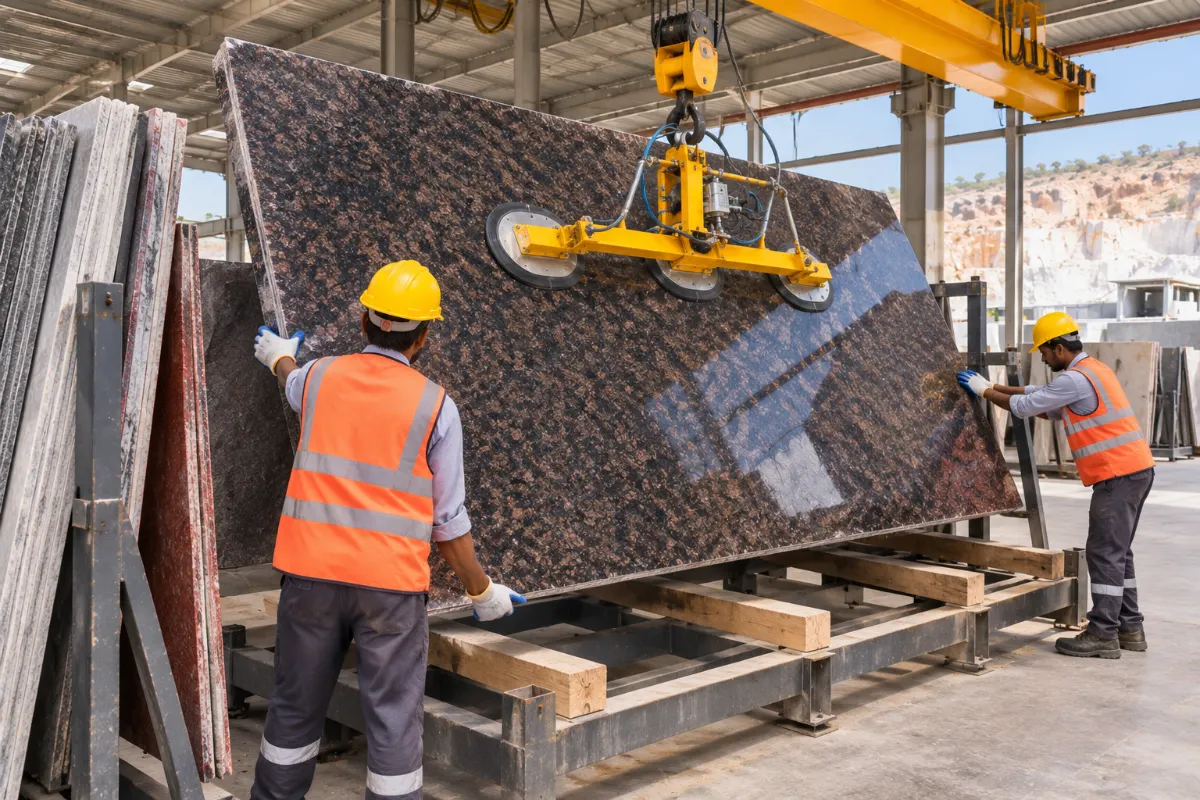
Use the right equipment for the job, such as slab clamps, vacuum lifters, spreader bars and forklifts with suitable attachments. Inspect clamps, vacuum pads and slings before every shift, and follow the rated load. Only trained and authorised operators should run forklifts and cranes. Keep people out of the swing and fall zone, and never stand on the downhill side of a slab being moved. When loading trucks or containers, follow the steps in how to pack and transport slabs safely.
Personal protection and dust control
Workers should wear safety shoes, gloves, hard hats and high-visibility vests in the yard. Cutting and polishing stone can create fine dust that may contain crystalline silica, so use water suppression, extraction and suitable respirators. Manage slurry and waste properly; see our marble slurry management guide.
Training, inspection and records
Train every new worker on yard rules before they start, and repeat short safety talks regularly. Inspect racks and lifting gear on a schedule and record defects and repairs. Report and investigate near misses as well as accidents. Good processes also protect product quality; combine them with the slab defects inspection checklist and the block-to-slab processing guide.
How ATTPL Mining and Minerals can help
ATTPL Mining and Minerals works with stone yards and buyers in Rajasthan on sourcing, quality checks and safe dispatch. For workforce training and HR records, ATTPL HRMS supports employee data management.
Frequently asked questions
What is the safest way to store stone slabs?
On properly rated racks such as A-frames, at a safe angle, balanced on both sides and secured against sliding or falling.
Who can operate slab-handling equipment?
Only trained and authorised operators, after checking that the equipment is in good condition and within its rated load.
Is stone dust harmful?
Fine dust from cutting stone can contain crystalline silica, which can harm the lungs. Use water suppression, extraction and suitable respirators.
Sources and further reading
This article is general safety information, not a substitute for a site-specific risk assessment or legal compliance advice. Follow applicable laws and equipment manufacturers' instructions.